





TONGUE-TIE NORTH WEST
Tongue-Tie Assessment & Division
We provide tongue-tie assessments and divisions with excellent aftercare so you feel informed and supported every step of the way.

Why An Assessment Matters
Around 1 in 10 babies are born with a tongue-tie, and over half of these will experience feeding issues as a result. If your baby is showing signs of a tongue-tie, having an assessment will help you to understand the impact it's having, and a tongue-tie cut can usually be performed on the same day.
At Tongue-Tie North West, we do so much more than simply look in your baby’s mouth to check if they have a tongue-tie. We carry out a thorough assessment of how your baby’s tongue moves and functions during feeding so that we can better understand whether the tongue is contributing to any feeding difficulties and whether treatment is likely to help.
We will also gather as much information as we can to understand the full feeding picture. This means talking through your pregnancy, birth and feeding history, observing a feed where possible and carrying out a hands-on assessment of your baby’s tongue mobility, lift and use.
It’s this level of depth that sets us apart and allows us to decide on a feeding plan going forwards so both you and baby can be happier while feeding.
Our Approach
We know that every baby is different and no feeding journey is the same, which is why we treat every baby individually, thoroughly understanding their history and the type of tongue-tie they have before performing a tongue-tie division.
With us, you aren’t just another family on the conveyor belt system. At every appointment, Laura and Sharon will either be working together, or with Kat* for a more personal approach.
You won’t be required to hold your baby’s head during the tongue-tie release, as you may be with the NHS or other private practitioners. We believe this responsibility should lie with the practitioners instead of the parents.
With two clinicians present, one will hold your baby’s head while the other completes the tongue-tie assessment and division*.
What To Expect From Your Tongue-Tie Appointment
The feeding assessment
Every appointment starts with an informal chat. We’ll discuss your pregnancy, the birth and your feeding journey so far to identify the issues you’re experiencing. You know your baby better than anyone, which is why we take the time to listen and understand.
From there, we’ll watch your baby feed. Both Laura and Sharon are International Board Certified Lactation Consultants (IBCLCs) and have both held NHS infant feeding lead positions, which means we have an incredible range of experience and knowledge in this area. It’s this feed that gives us so much information about your baby’s tongue movements and oral function, and we’ll work out how your baby’s tongue lifts and moves when they’re feeding.
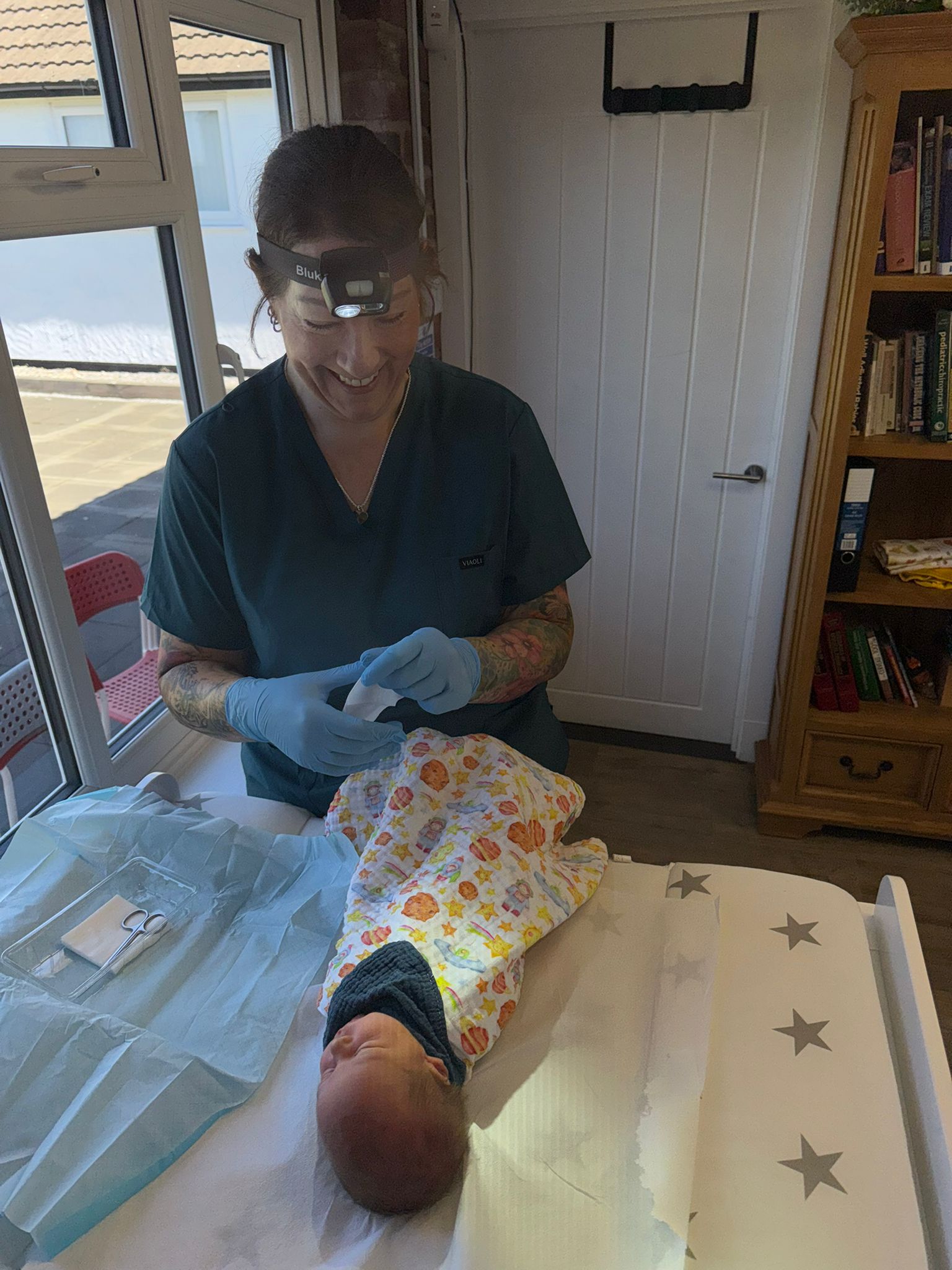
During the assessment, we'll ask you to lay your baby on our treatment table where we will use one of our big muslin cloths to wrap them. We'll have a good look and feel inside your baby’s mouth and use a validated tool to assess the appearance and function of your baby’s tongue, explaining what we're looking for as we go.
What to bring to the appointment
We ask that you bring your baby’s red book to your appointment, along with anything that you use for a feed. This might include nipple shields, bottles and expressed milk, formula, etc. If you keep a feeding diary or have notes on patterns you've noticed, bring those along too, as they can be really useful.
Please try to bring your baby at least a little hungry to the appointment. This ensures they’re ready to feed when we complete the infant feeding assessment.
Preparing for the treatment
If we find that a tongue-tie is present and is likely affecting the baby’s feeding, we’ll discuss your options and talk you through exactly what a division involves.
We’re able to perform the tongue-tie procedure during your appointment in most cases, however there’s absolutely no obligation or pressure to go through with the tongue-tie procedure immediately if you'd prefer some time to think. It's your decision, and we want you to feel fully informed before you make it.
The procedure (frenulotomy)
A tongue-tie surgery is known as a frenulotomy and only takes a few minutes. Your baby will be placed on a table with two practitioners present. One will hold the baby’s head and the other will perform the division.
Using sterile, blunt-tipped scissors, we gently lift the tongue and make a cut in the tight piece of skin underneath (the frenulum). There's usually very little bleeding, and most babies are calm enough to feed again within a minute or two.
Aftercare and follow-up appointments
We'll support you through that first feed after the division and make sure your baby is comfortable before you leave. You'll go home with clear aftercare guidance, a full feeding plan and some gentle tongue exercises to help your baby build strength and movement in the weeks that follow.
A follow-up appointment is included as standard, because feeding often takes a little time to settle into its new rhythm, and we want to be there to support you through that, not just on the day itself. We’ll organise this appointment before you leave.
If you have any questions before your follow-up appointment, or need some advice, we offer support via email and WhatsApp for 14 days after the tongue-tie surgery.
Meet Our Tongue-Tie Practitioners
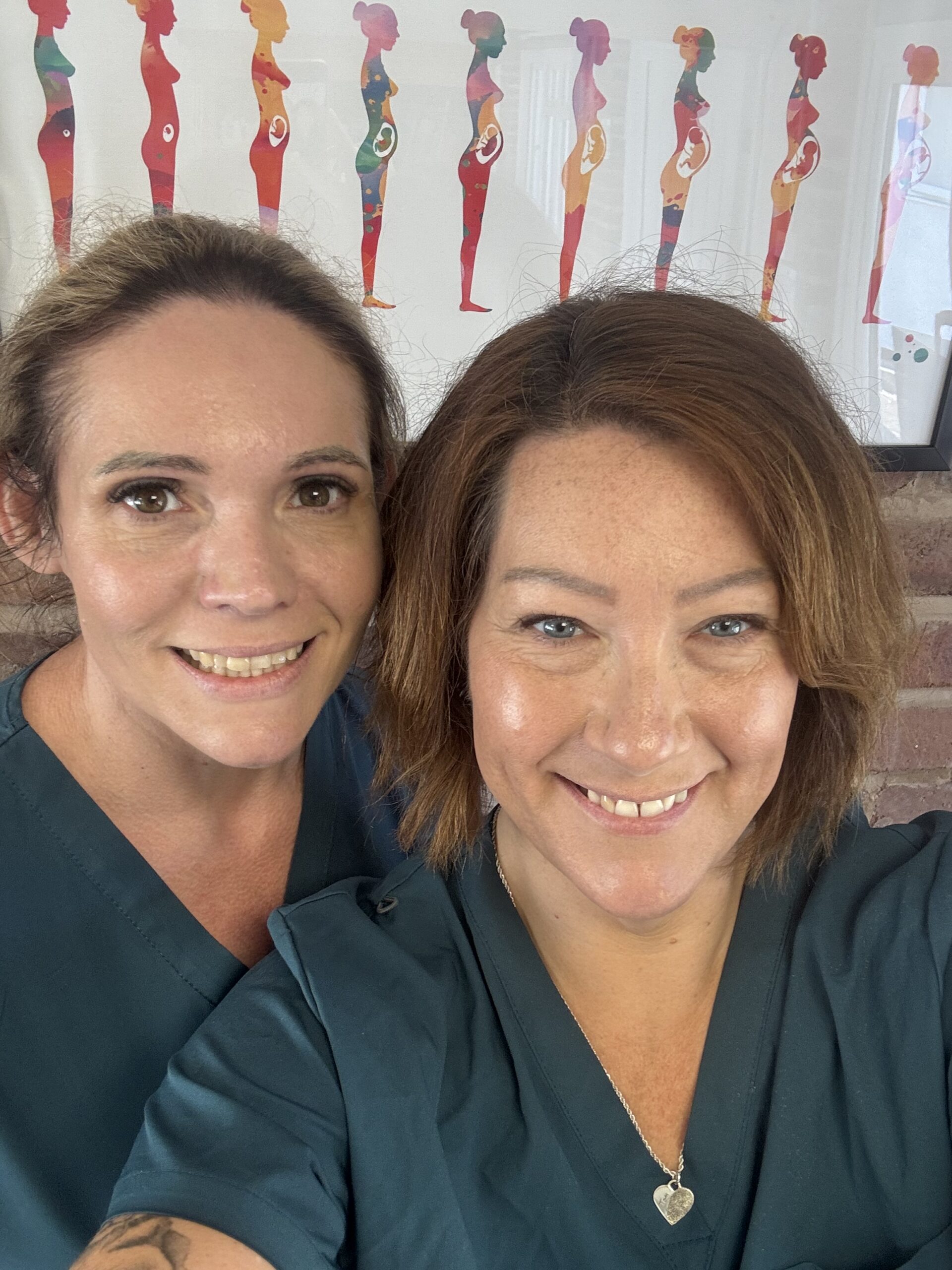
We're Laura and Sharon, the founders of Tongue-Tie North West. We set up our clinic because we saw first-hand how little dedicated support there was for parents dealing with tongue-tie and feeding difficulties in young babies, and we wanted to change that.
We're both qualified International Board Certified Lactation Consultants (IBCLCs), and between our backgrounds (Laura as a health visitor and Sharon as a midwife, both having held NHS infant feeding lead roles), we bring over 40 years of combined experience to every appointment.
Why We Have Over 100 5* Reviews
Parents choose us for many reasons, but these are the ones that come up again and again:
- There’s two of us at every appointment: We’ll never expect you to hold your baby’s head during a tongue-tie cut
- Time to actually talk: It’s never an in-and-out job. We like to take the time to understand the issues you’re experiencing so we can make sure we address them
- A follow-up appointment included as standard: Most companies expect you to pay for a follow-up, but we include it so we can check the feeding progress you’ve made
- A homely clinic: Our Chester clinic is homely and inviting with easy parking
- Real qualifications: We’re IBCLC-accredited and highly experienced in all areas of infant feeding and tongue-tie.
Book An Appointment With Us
If you think your baby might have a tongue-tie, or feeding just isn't feeling right, we'd love to help. Get in touch to book your assessment, and let's work together towards calmer, happier feeds.
Frequently Asked Questions
It’s not just signs in the baby to look out for, either. The mother might also experience signs that their baby has a tongue-tie, including painful or cracked nipples, recurring mastitis and low milk supply. All of these things can lead to feelings of exhaustion and anxiety or stress around breastfeeding.